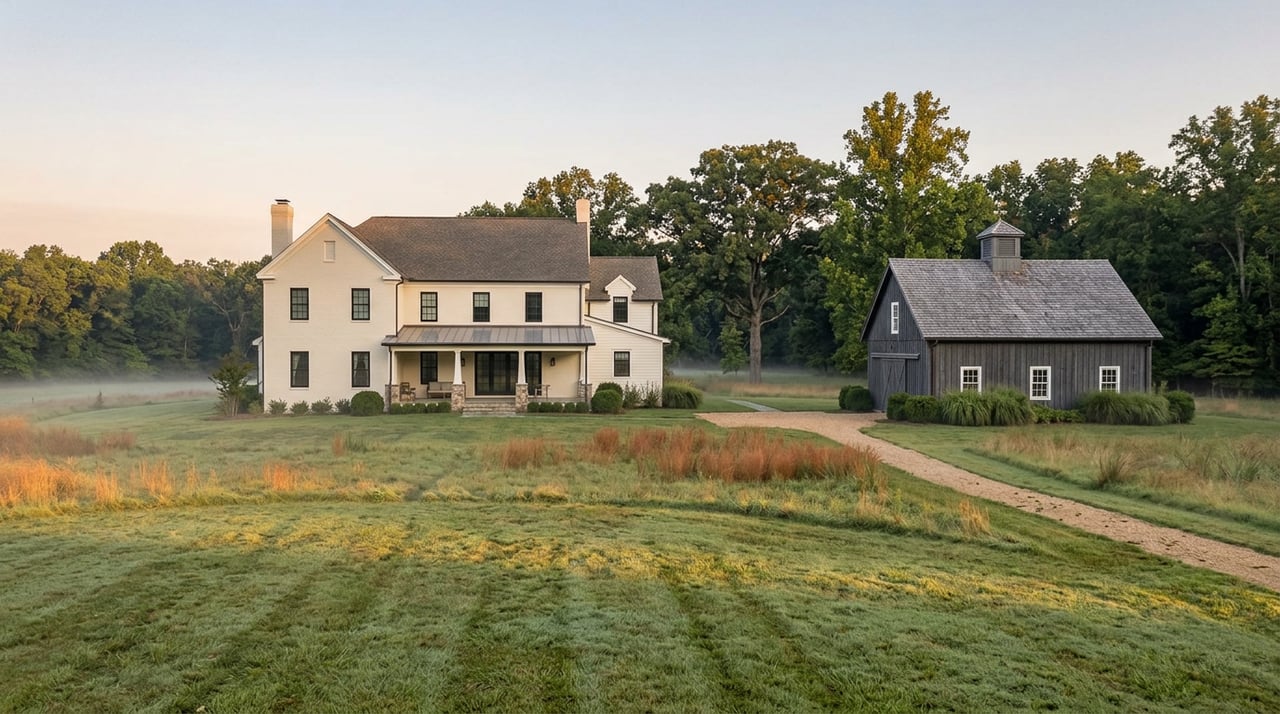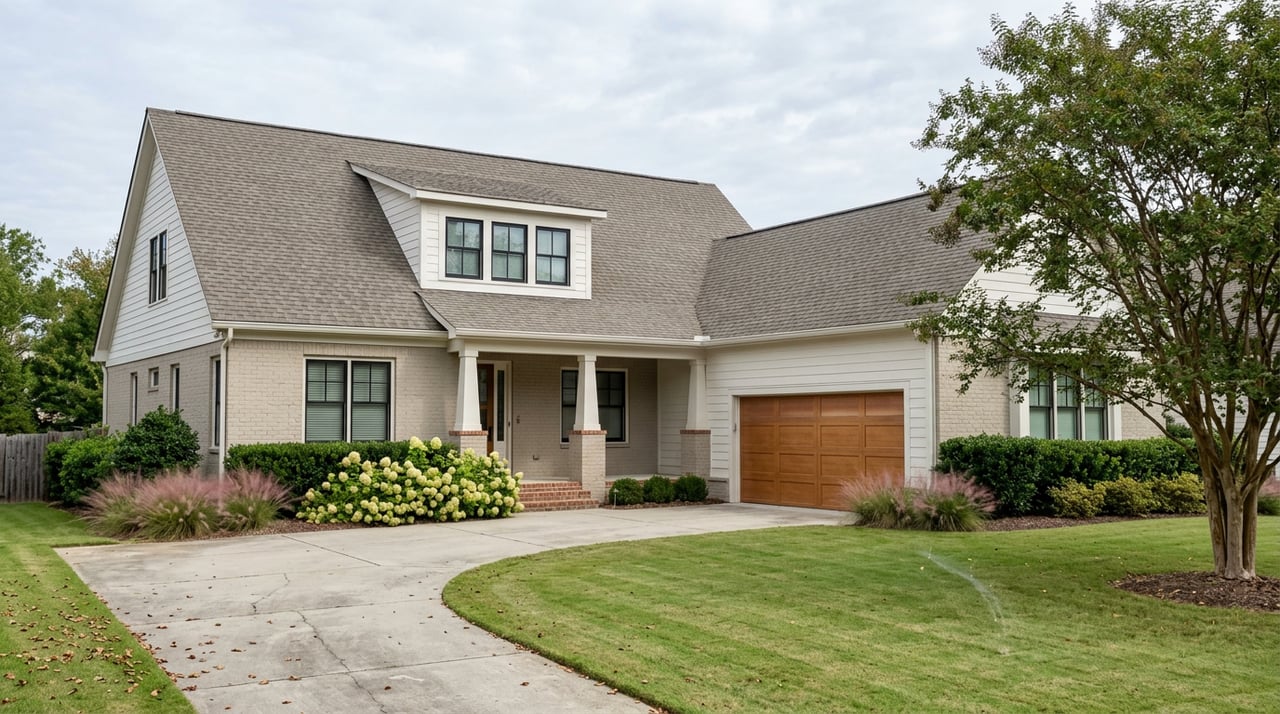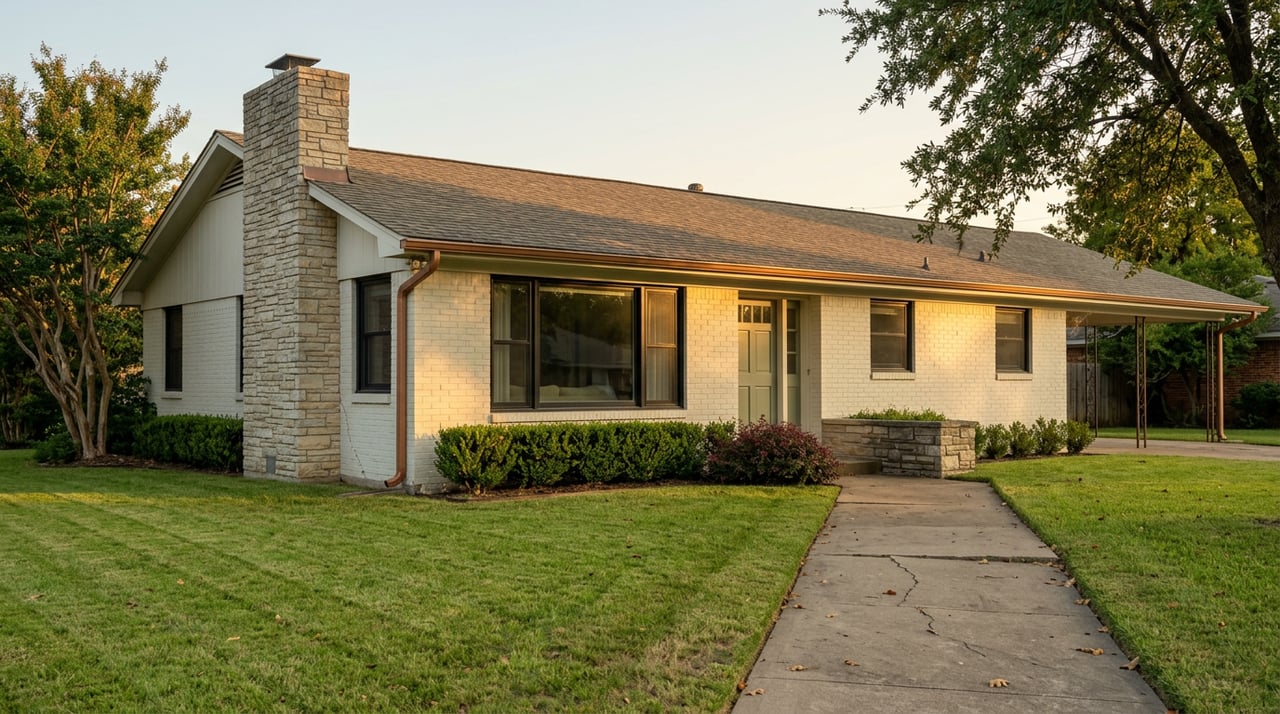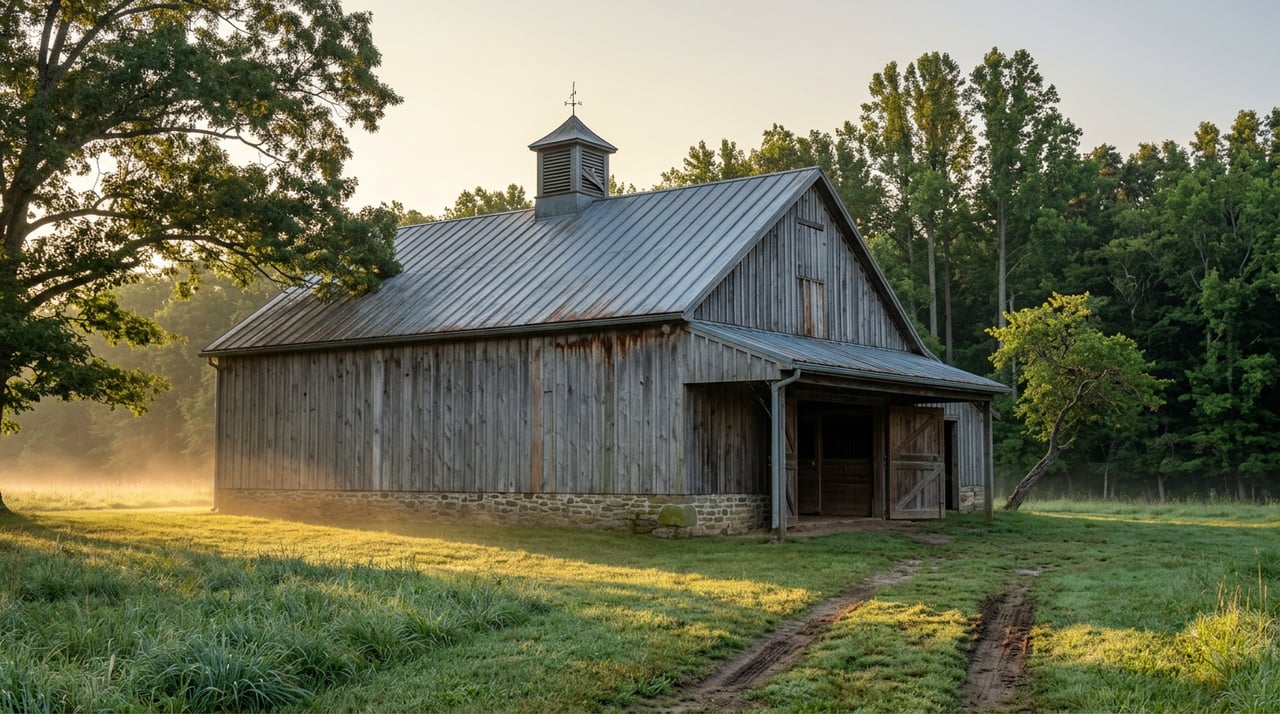
Two lots go up within a few weeks of each other, both off the same gravel stretch near Birmingham Road, both marketed with the same three words: AG-1, horse-ready, private. One measures 2.9 acres. The other measures 3.1 acres. A buyer comparing them on paper would reasonably assume they are the same product with a rounding error between them. They are not. That two-tenths of an acre is the difference between a parcel Milton treats as an ordinary residential lot and one the city formally classifies as a "large lot," the category its own planning staff use to decide who gets the next round of zoning relief.
Most guides to buying acreage in Milton spend their word count on the wrong number.
Every Guide Quotes a Different Minimum, and None of Them Is the One That Matters
Search around and you will find real estate sites confidently stating that AG-1, Milton's agricultural zoning district, requires a one-acre minimum lot. Others say one acre on paved frontage and three acres on unpaved roads. At least one puts the minimum at four acres. All of them are describing the same code and none of them agree, which tells you something useful on its own: the base zoning minimum is not a stable line, because it depends on frontage type, when the lot was platted, and whether it carries grandfathered dimensions from before recent code updates. Milton adopted a Unified Development Code in April 2024 that consolidated its zoning chapters, and the AG-1 provisions have kept moving since.
The number that actually governs value is not that shifting minimum. It is the threshold Milton itself uses for policy purposes: three acres or larger, which the city defines as a "large lot" for the specific purpose of deciding which properties qualify for future incentives designed to keep bigger parcels from being carved up. That is the line worth building a purchase decision around, because it is the line the city is actively legislating.
What Actually Starts to Change at Three Acres
Milton's Community Development staff spent much of 2025 developing a package of incentives aimed squarely at owners of three-plus-acre parcels, built around one goal: give people a reason to keep large lots intact rather than subdivide them. City leaders have called large lots valuable for safeguarding Milton's rural heritage and scenic viewsheds, and at an October 6, 2025 Council meeting, Interim Community Development Director Diana Wheeler walked through the proposals city staff had narrowed down after months of work with the Milton Equestrian Committee.
Some ideas were already off the table by that meeting. The city ruled out allowing short-term rentals on large lots and declined to create a standalone "hobby farm" use category. Still under active consideration: an expedited administrative path for covered riding arenas on properties of ten acres or more, streamlined approval for certain home-based businesses run out of accessory structures, and a systematic process for agricultural exemptions tied to bona fide farm activity. None of this is finalized. It is exactly the kind of in-progress policy that a buyer evaluating a nine-acre parcel today needs to understand, because the rules for what that parcel can become may look different by the time a barn gets built.
The Setback Fight That Just Reached the Council
While the large-lot incentive package works through committee, a separate and more immediate change moved to a City Council vote on January 5, 2026. Milton's current AG-1 rules require a 60-foot front yard setback, a 50-foot rear setback, and 10 feet between a pool and the rear property line. Staff proposed loosening those standards, and in November 2025 the Planning Commission countered with its own version: a 45-foot front setback, a 65-foot rear setback, a pool set 30 feet back, and a mandatory 25-foot natural buffer.
The detail buyers tend to miss is who this applies to. These amendments only touch qualified subdivisions built on lots smaller than three acres, with internal streets that do not allow pass-through access. In other words, the city is tightening the rules precisely where AG-1 zoning is being used to build smaller-lot developments rather than preserve open acreage, which is the same three-acre line showing up again from a different direction. A 2.5-acre "estate lot" inside a new AG-1 subdivision is now operating under a different and more restrictive setback conversation than a standalone 6-acre parcel down the road.
A Setback Fight That Already Happened
The abstract 100-foot rule for any building that houses animals becomes concrete fast once you see it applied. In 2021, the owners of a combined 18-acre property at 2105 Bethany Way, operating as a winery and event farm, needed a formal variance because their existing parking areas, wood pavilion, horse arenas, and driveways sat inside that 100-foot activity setback from the property line. Structures that house animals cannot sit within 100 feet of a boundary without approval, full stop, regardless of how much total acreage the property carries. A buyer picturing a barn tucked into the back corner of a lot needs to measure that corner before falling for the listing photos, not after closing.
Two Hundred Farms, No Cluster
Here is the fact that should reshape how a buyer thinks about location within Milton. In early 2024, the Milton Equestrian Committee set out to count every active horse farm in the city, expecting to find somewhere around 100. They found more than 200, roughly double the estimate, and that number does not even include parcels with other livestock or larger lots simply set up to hold horses when needed. The committee mapped them, and the farms are not clustered in one equestrian district. They are spread across neighborhoods throughout the city.
That matters because it breaks the mental model buyers bring from conventional subdivisions, where distance from a clubhouse or a golf course sets a predictable price gradient. In Milton, being close to Crabapple's shops or to The Manor Golf & Country Club still shapes daily convenience, but it tells you very little about whether a specific parcel actually supports the equestrian use a buyer wants. The Milton Equestrian Committee itself is chaired by Tony Rich, whose farm partners with the Lionheart WORKS vocational program to place young adults with neurodevelopmental differences in weekly farm jobs, feeding, watering, and working alongside the horses. That kind of working farm sits inside a residential fabric, not a horse-only zone. The only way to know what a given parcel supports is to check that parcel, not the neighborhood around it.
What the Per-Acre Price Actually Hides
Land currently on the market across Milton this month lists at an average of roughly $587,000 to $596,000 per acre, a figure pulled from active land and house-with-acreage listings citywide. Treat that average as a starting orientation, not a pricing tool. A 2.8-acre parcel and a neighboring 3.1-acre parcel might carry nearly identical price tags per acre while sitting on opposite sides of the large-lot policy line, one eligible for the incentives working through Council and one not. The average smooths over exactly the distinction that determines long-term flexibility and resale pool.
There is a real tax lever tied to this too. Fulton County administers the state's Conservation Use Value Assessment program, which can tax qualifying land based on its agricultural use value rather than its full development value. Eligibility depends on bona fide agricultural use of the parcel, not simply on how many acres appear on the plat, which is one more reason two lots of similar size can carry very different carrying costs.
Frequently Asked Questions
Is the AG-1 minimum lot size in Milton one acre or four acres? Sources disagree because the base minimum has shifted with code updates and varies by frontage type and platting history. Verify the specific parcel's zoning history with the city rather than relying on any general rule, and focus instead on whether the lot clears the three-acre large-lot threshold, which is the line the city is actively legislating around.
Does owning three or more acres guarantee I can build a barn or covered arena? No. Setback rules, including the 100-foot minimum for any structure housing animals, apply regardless of total acreage, and covered or lighted arenas involve separate acreage thresholds and use permits still being finalized as part of the large-lot incentive discussion.
Does every property in Milton qualify for CUVA tax treatment? No. Conservation Use Value Assessment eligibility depends on documented agricultural use of the land, administered by Fulton County, and is separate from the city's large-lot policy work. A parcel's acreage alone does not determine eligibility.
Buying acreage in Milton means buying into a zoning conversation that is still being written. Council votes, committee recommendations, and a live farm census all point to the same conclusion: the line that decides what a parcel can become sits at three acres and ten acres, not at whatever base minimum a listing happens to quote. If you are comparing two properties that look identical on paper, that is exactly the comparison worth getting right before you write an offer.
Atlanta Town & Country works this ground parcel by parcel, not neighborhood by neighborhood. If you are weighing acreage in Milton and want someone to read the zoning as closely as the listing photos, Let's Connect.